
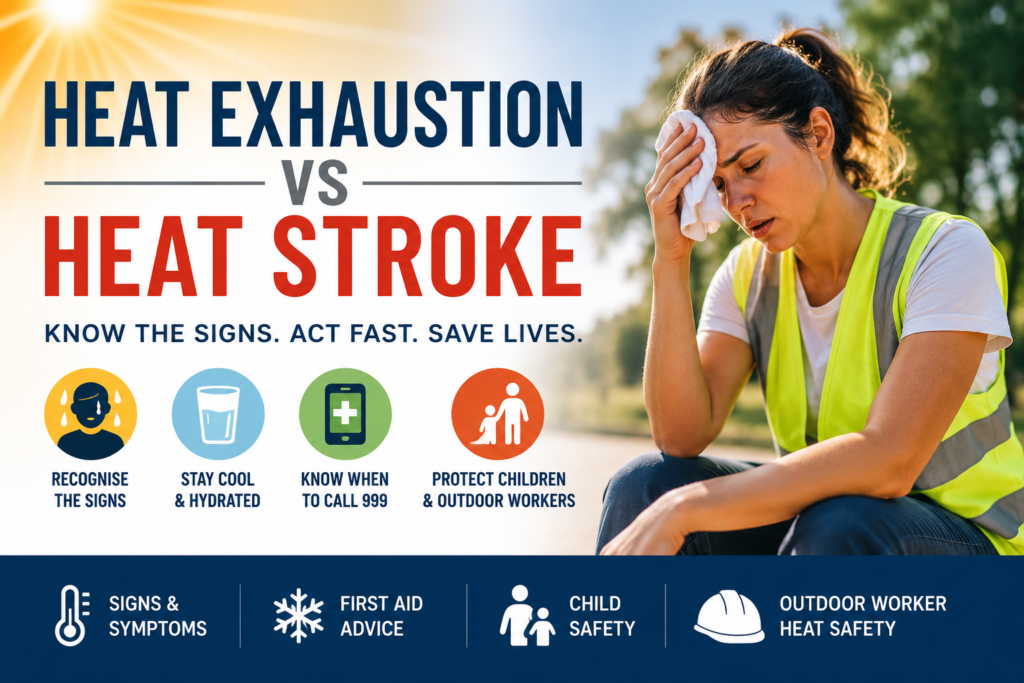
Learn the difference between heat exhaustion and heat stroke, recognise the signs and symptoms, know when to call 999, and discover first aid advice for children and outdoor workers.
As temperatures rise across the UK, cases of heat-related illness become more common. Knowing the difference between heat exhaustion and heat stroke is an important first aid skill that could help you protect yourself, your family, or someone you work with.
Although both conditions are caused by the body overheating, heat stroke is a medical emergency and requires immediate treatment.
What is Heat Exhaustion?
Heat exhaustion occurs when the body becomes too hot and loses excessive amounts of water and salt through sweating.
If recognised early, most people recover quickly with rest and cooling measures.
Signs and Symptoms of Heat Exhaustion
Common heat exhaustion symptoms include:
- Heavy sweating
- Feeling dizzy or faint
- Headache
- Nausea or vomiting
- Muscle cramps
- Weakness or tiredness
- Pale, cool, clammy skin
- Rapid pulse
- Feeling extremely thirsty
First Aid for Heat Exhaustion
If you suspect heat exhaustion:
- Move the person to a cool, shaded area.
- Encourage them to rest.
- Give cool water to drink slowly.
- Remove unnecessary clothing.
- Cool their skin using damp cloths or a fan.
If symptoms do not improve within 30 minutes, seek medical advice.
What is Heat Stroke?
Heat stroke is a life-threatening condition that occurs when the body loses its ability to regulate temperature.
Heat stroke should always be treated as an emergency.
Signs and Symptoms of Heat Stroke
Heat stroke symptoms can include:
- Confusion or unusual behaviour
- Severe headache
- Hot, flushed skin
- High body temperature
- Stopping sweating despite feeling hot
- Seizures
- Difficulty breathing
- Loss of consciousness
When Should You Call 999?
Call 999 immediately if someone:
- Is confused or difficult to wake
- Has a seizure
- Becomes unconscious
- Has stopped sweating and feels extremely hot
- Is struggling to breathe
- Shows signs of heat stroke
While waiting for help, move them to a cool area and begin cooling them down as quickly as possible.
Signs Your Child is Overheating
Children and babies can become dehydrated more quickly than adults, making them more vulnerable during hot weather.
Child Overheating Signs
Look out for:
- Flushed cheeks
- Irritability or unusual behaviour
- Tiredness
- Headaches
- Feeling sick
- Reduced urine output or fewer wet nappies
- Excessive thirst
Encourage regular drinks, keep children in shaded areas, and dress them in lightweight clothing.
Never leave a child alone in a parked vehicle, even for a short period of time.
Heat Safety for Outdoor Workers
Outdoor workers are at greater risk of heat exhaustion and heat stroke, particularly during heatwaves.
Tips for Staying Safe in Hot Weather
- Drink water regularly.
- Take frequent breaks in the shade.
- Wear lightweight, breathable clothing.
- Use sunscreen and wear a hat.
- Avoid heavy work during the hottest part of the day.
- Look out for colleagues who may be struggling.
Recognising the early signs of heat exhaustion can help prevent a serious medical emergency.
Final Thoughts
Understanding the difference between heat exhaustion and heat stroke is a simple but valuable first aid skill.
By recognising the signs early, knowing when to call 999, and taking sensible precautions in hot weather, you could help prevent a minor illness from becoming a life-threatening emergency.