
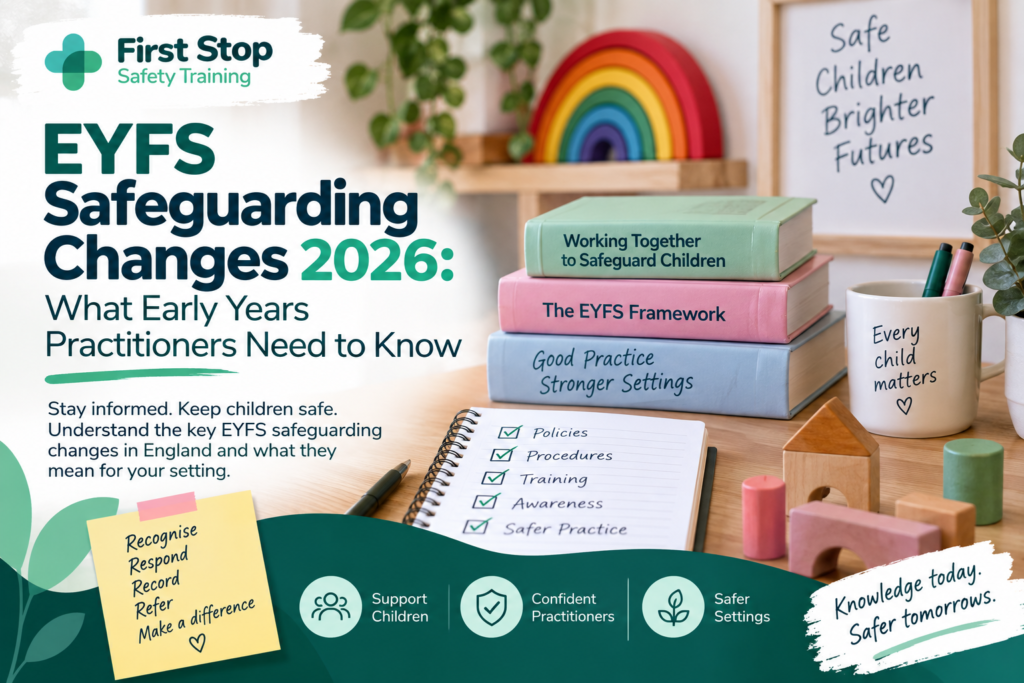
Safeguarding requirements in Early Years continue to develop, and 2026 has brought important changes for nurseries, childminders and Early Years practitioners in England.
With an updated Working Together to Safeguard Children and changes to the Early Years Foundation Stage (EYFS) statutory framework from 1 September 2026, now is a good time for settings to review their safeguarding knowledge, policies and everyday practice.
What Changed in Working Together to Safeguard Children 2026?
The statutory Working Together to Safeguard Children guidance was updated in March 2026 and applies to Early Years and childcare settings in England.
The changes strengthen several areas of safeguarding practice, including responses to child sexual abuse, domestic abuse and coercive control, as well as expectations around information sharing and inclusive, anti-discriminatory safeguarding practice.
The guidance also reinforces that safeguarding is a shared responsibility, with practitioners and organisations working together to identify concerns and provide children and families with appropriate help, support and protection.
New EYFS Safeguarding Requirements from September 2026
Further changes to the EYFS statutory framework came into force on 1 September 2026.
One of the most significant changes is around safer sleep. Explicit safer-sleep requirements have now been brought into the main EYFS framework, strengthening expectations for providers caring for babies.
There are also safeguarding clarifications within the updated framework, alongside new requirements concerning screen use and other aspects of children’s safety and welfare.
These changes are also reflected in Ofsted’s Early Years inspection approach from September 2026. Inspectors will consider whether settings understand and effectively implement statutory safer-sleep guidance, alongside safer eating and weaning practices.
What Does This Mean for Early Years Practitioners?
Safeguarding isn’t simply about having the correct policy stored in a folder.
Practitioners need to understand how to recognise possible signs of abuse, neglect or exploitation, respond appropriately to concerns, record information accurately and follow their setting’s safeguarding procedures.
Settings should also consider whether staff understand recent changes to statutory guidance and whether safeguarding training remains current.
Keeping Safeguarding Knowledge Up to Date
Regular Safeguarding and Child Protection training can help Early Years practitioners refresh their knowledge, understand their responsibilities and confidently respond when concerns arise.
Our online Safeguarding and Child Protection course has been developed for Early Years professionals and is also available through the First Stop Learning Hub, alongside a growing library of Early Years CPD training.
Keeping safeguarding knowledge current isn’t simply about meeting requirements. It’s about ensuring that everyone working with children understands their role in recognising concerns and helping keep children safe.